Ground Rules: How the Valley's Own Geography Is Shaping the Way We Play Soccer
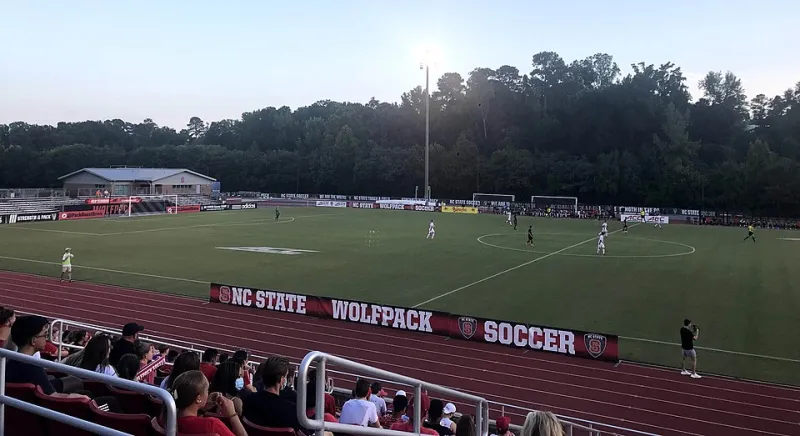
Photo: user:Pithon314, CC BY-SA 4.0, via Wikimedia Commons
Ask any coach who's moved to L Valley from somewhere flat, and they'll tell you the same thing: the game here just feels different. The ball moves differently. The players breathe differently. Even the grass behaves differently depending on the time of year. That's not just perception — there's actual science behind it, and understanding it might be the edge your team hasn't thought to look for.
What Living in a Valley Actually Does to a Soccer Pitch
Valleys are defined by their relationship with water and air. Mountains or ridgelines on either side create a natural funnel — for precipitation, for cold air drainage, and yes, for wind. The valley floor collects moisture in ways that flat terrain simply doesn't, which has direct consequences for the condition of a soccer field.
"We get soft ground earlier in the season and it stays soft longer," says Marcus Delgado, a head coach with L Valley Soccer's U14 boys program. "By March, we're dealing with fields that other leagues wouldn't even open. You have to adjust your training or you're just spinning your wheels — literally."
Soft, saturated ground changes the physics of the game. A long ball that might skip and run on firm turf will stop dead on a waterlogged pitch. First touches require more cushion. Defenders who rely on clearing the ball long and fast suddenly find themselves adjusting to a slower, lower-bouncing game.
Elevation: The Quiet Variable Nobody Talks About
L Valley sits at a moderate elevation — not the thin-air extremes of high-altitude mountain towns, but enough to matter. At elevations between 2,000 and 4,000 feet, the air is measurably less dense than at sea level. For youth players still developing their cardiovascular systems, that difference is real.
Sports physiologist Dr. Erin Caldwell, who works with several youth athletic programs in the region, explains it plainly: "At higher elevations, you're taking in slightly less oxygen per breath. For trained athletes, the body adapts. But for kids who aren't used to it, or teams visiting from lower elevations, you'll see fatigue set in faster — especially in the second half."
Local players have a built-in advantage here. Growing up training at valley elevation means their bodies have quietly adapted over years of play. Visiting teams, particularly those traveling from coastal or low-lying areas, often underestimate how much the altitude will affect their energy management by the 60th minute.
Wind Patterns and the Art of Reading the Field
One of the most overlooked factors in valley soccer is wind — not random gusts, but the predictable, directional airflow that valleys tend to produce. Thermal wind patterns shift throughout the day as the valley floor heats up and cool air descends from higher elevations in the evening.
"We have a saying on our team," laughs Priya Nair, a midfielder in L Valley's women's recreational league who's played here for eleven years. "First half, kick long. Second half, keep it on the ground." She's joking — mostly — but there's real tactical logic underneath it. Evening games at certain L Valley fields consistently produce a headwind in one direction during the later stages of play, and experienced local teams plan around it.
Coaches who teach their players to read wind conditions — adjusting set piece delivery, modifying the weight of through balls, choosing when to play over the top versus keeping possession on the deck — have a genuine tactical advantage over teams that ignore it.
Grass Types and the Drainage Equation
Not all grass is created equal, and the valley's climate strongly influences what grows well here. L Valley's fields predominantly feature cool-season grasses like tall fescue and Kentucky bluegrass, which thrive in the region's wet winters and mild summers but can go dormant and thin out during dry stretches.
Field maintenance coordinator Tom Briggs has been managing L Valley Soccer's home fields for going on eight years. "The drainage is everything," he says. "We've put a lot of work into improving the sub-base on our main fields, but the valley clay soil still holds water. When we get a heavy rain two days before a game, we're making judgment calls right up until kickoff."
For players, the varying surface conditions across a single season mean developing versatility. A kid who only knows how to play on perfect turf is going to struggle when the game moves to a heavier pitch in November. The best L Valley players develop a feel for adjusting their touches, their runs, and their body positioning based on what the ground is giving them that day.
Adapting Your Game — The L Valley Advantage
Here's the thing: everything that makes playing soccer in L Valley more challenging is also what makes L Valley players more adaptable. When your home field teaches you to read wind, manage soft ground, and pace yourself at elevation, you develop a soccer intelligence that pure technique training can't replicate.
Coach Delgado puts it best: "Our kids learn the game in a way that's honest. The environment doesn't let them be lazy. And when they travel to tournaments at lower elevations on firm turf, they feel fast. They feel sharp. The valley trains them without them even knowing it."
That's the quiet gift of playing soccer here. The valley is a tough teacher — but it's one of the best ones around.