One Field, Many Voices: How Spanish-Speaking Families Are Shaping L Valley Soccer's Soul
The word for it in Spanish is fútbol, and the way some families around here say it — with a kind of warmth and weight that English doesn't quite capture — tells you something important. For a lot of L Valley's Spanish-speaking community, soccer isn't just a sport. It's a language all its own. And over the past decade or so, that language has been quietly rewriting how this league thinks, plays, and comes together.
This is an opinion piece, but it's grounded in real conversations with real people from around the valley. What follows isn't a policy statement or a formal study. It's more of an honest look at something beautiful that's been happening in plain sight.
The Families Who Brought the Game With Them
When the Mendoza family moved to L Valley from Oaxaca about eight years ago, their oldest daughter, Valentina, was nine years old and had already been kicking a ball around since she could walk. Her dad, Ernesto, had played in a semi-organized adult league back home and had strong opinions about how the game should be played — with creativity, with flair, and with a joy that he felt was sometimes missing from the more structured, results-focused approach he saw in American youth soccer.
"In Mexico, when I was growing up, we played on the street," Ernesto says. "You had to be creative because the space was small and there were no referees. You learned to solve problems yourself."
Ernesto eventually started helping out as an assistant coach for Valentina's recreational team. The head coach at the time, a longtime L Valley volunteer named Tom, says the collaboration changed how he thought about the game.
"Ernesto introduced these small-sided games and possession drills I'd never seen before," Tom says. "The kids picked it up instantly. It was more fun and it was also, honestly, better soccer."
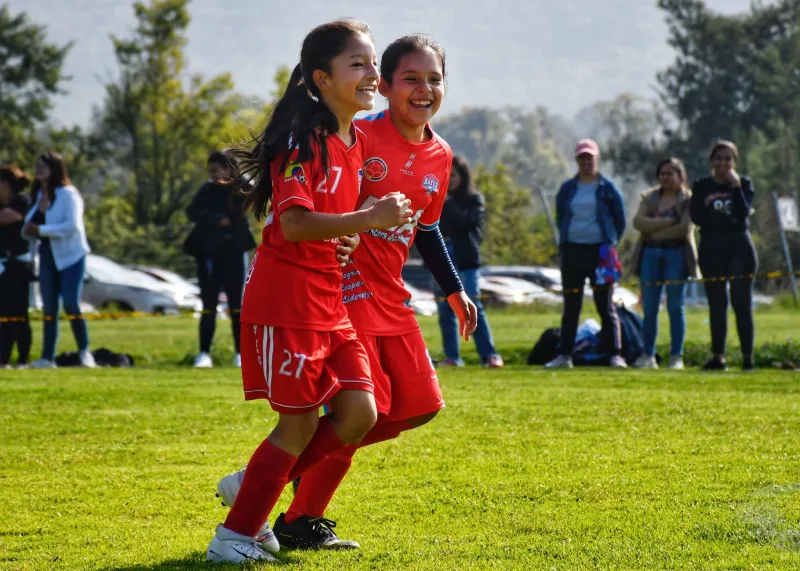
Valentina is now 17 and one of the most technically gifted players in the U17 girls division. She plays with a style that her current coach describes as "street soccer with discipline" — and she gives full credit to growing up between two soccer cultures.
A Different Coaching Philosophy
Across L Valley's coaching staff, the influence of Latino soccer culture shows up in some consistent ways. There's a greater emphasis on touch and technique at young ages, a willingness to let kids express themselves creatively rather than locking them into rigid formations, and a coaching communication style that tends to be more relationship-centered than command-centered.
Coach Lucia Vargas, who runs the U10 girls program and coaches in both English and Spanish depending on who she's talking to, puts it plainly: "In a lot of traditional American youth sports coaching, the coach talks and the kids listen. In my experience with the families I grew up with, the game teaches you. The coach is there to guide, not to control."
That philosophy resonates with sports development research that emphasizes player autonomy and intrinsic motivation — but Lucia didn't learn it from a textbook. She learned it watching her uncles coach in a parking lot in Fresno.
She also notes something practical: coaching bilingually has made her a better communicator overall. "When you have to explain a concept in two languages, you have to really understand it yourself," she says. "It sharpens you."
What Gets Lost in Translation — and What Gets Found
It would be dishonest to write this piece without acknowledging that cultural exchange isn't always seamless. There have been moments of friction in L Valley — miscommunications between families and league administration, occasional tensions around different expectations for competition versus development, and the simple fact that navigating a sports organization's paperwork and communication in your second language is genuinely hard.
Some Spanish-speaking families have quietly disengaged from the league not because they didn't love soccer, but because they felt the systems weren't built with them in mind.
League coordinator Patricia Huang, who has been working to improve multilingual outreach over the past two seasons, is candid about this. "We've done a better job in the last couple of years of translating our registration materials and having Spanish-speaking volunteers at sign-up events," she says. "But there's more to do. Real inclusion isn't just translation — it's making sure people feel genuinely welcome to contribute, not just participate."
That distinction matters. The families who have had the biggest impact on L Valley Soccer's culture aren't just players and fans. They're coaches, volunteers, and informal mentors who feel ownership over the league. Building more of that ownership is where the real work is.
The Style of Play Is Changing — in the Best Way
Ask any coach who's been around L Valley for more than five years whether the style of play has shifted, and you'll get some version of the same answer: yes, and it's more fun to watch.
There's more emphasis on ball movement and possession. Players are more willing to try skill moves and take on defenders one-on-one. There's a rhythm to how some of our teams play that feels distinctly influenced by the Latin American soccer tradition — patient, technical, and occasionally breathtaking.
"Our girls now, they play with confidence on the ball that I didn't see as much ten years ago," says Coach Tom, who is still involved with the youth program. "I think a lot of that comes from the influence of families who grew up watching and playing a different kind of soccer. It's made us better."
More Than a Game, More Than a League
On Saturday mornings at the valley fields, you'll hear Spanish called across the pitch — ¡Muévete! ¡Dale! ¡Buena jugada! — mixed in with English encouragement and the universal language of a crowd reacting to a good play. Those sidelines represent something worth protecting and building on.
L Valley Soccer has always been about community. But community isn't static. It grows, changes, and gets richer when new voices join the conversation. The Spanish-speaking families who have made this league their home haven't just added players to the roster. They've added something to the soul of the game here.
And that, more than any trophy or tournament result, is the kind of thing that makes a soccer club worth being part of.