Her Game, Her Valley: The Women and Girls Rewriting L Valley Soccer's Record Books in 2024
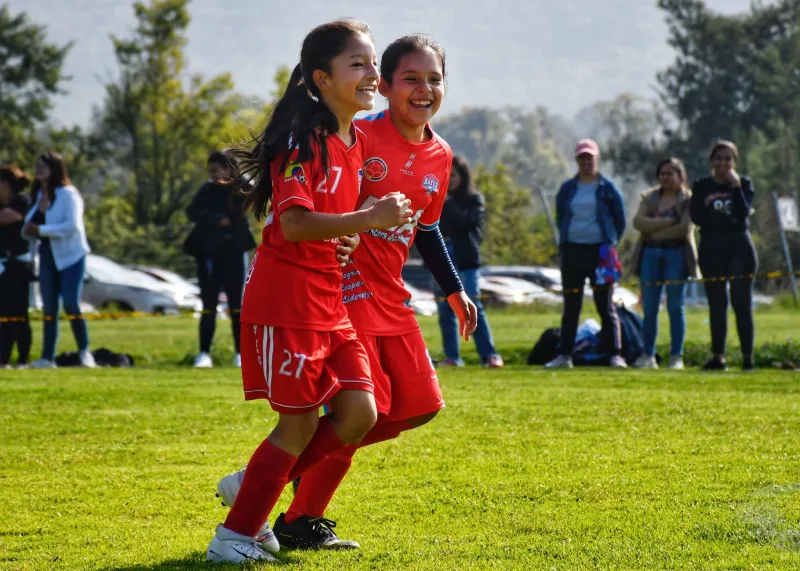
Something shifted in L Valley girls' soccer this year. You could feel it in the registration numbers when the season opened — up significantly from 2023, which was itself a record year. You could see it in the caliber of play at the U-12 and U-14 levels, where technical quality has taken a visible leap. And you could hear it in the conversations happening on sidelines, in parking lots, and at end-of-season banquets, where parents and coaches kept using the same word: momentum.
The girls' game in this valley has momentum. And if the people building it have anything to say about it, 2024 is just the beginning.
By the Numbers: A Record-Setting Season
L Valley Soccer registered more female players this season than at any point in the organization's history. Across all age groups — from the youngest recreational divisions to the adult women's amateur leagues — participation climbed by double digits compared to last year.
The U-10 and U-12 girls' divisions saw the largest percentage increases, which coaches and administrators say is a particularly encouraging sign. Players who get into the sport at those ages and stay engaged through early adolescence tend to develop into the foundation of competitive programs at the high school level and beyond.
"When you see those younger age groups grow, you know you're building something real," says Carla Mendez, who coordinates girls' programming for the valley leagues. "Those aren't just numbers. Those are future players, future coaches, future parents who are going to bring their own daughters into the sport someday."
The adult women's league also expanded this season, adding two new teams and lengthening its schedule in response to demand. Several players in that division are in their 30s and 40s, many of them returning to the sport after years away or picking up a ball competitively for the first time.
Profiles in Progress: Players to Watch
Among the dozens of standout performances this season, a few names have been mentioned consistently by coaches across the league.
Sofia Alvarez, 13, U-14 Division — Described by her coach as "the most complete player I've coached at this age level in fifteen years," Sofia combines technical precision with a reading of the game that seems well beyond her years. She led her team in assists this season and has already been invited to attend a regional identification camp.
Destiny Okafor, 11, U-12 Division — A goalkeeper who coaches say has changed the way her team approaches defense. Destiny's distribution has become a genuine attacking weapon, and her confidence between the posts has been credited with transforming her team's overall mentality. Her mother played basketball in college; Destiny chose soccer because, in her words, "it's the sport everyone in the world plays."
Amara Johansson, 17, U-18 Division — A midfielder who has committed to pursuing soccer at the collegiate level, Amara spent this season mentoring younger players in addition to leading her own team. Her coach calls her "the kind of player who makes everyone around her better, which is the rarest quality there is."
These players represent something broader than individual talent. They're emblematic of a generation of L Valley girls who have grown up taking it for granted that soccer is their sport too — and who are now delivering on that assumption in spectacular fashion.
Coaching Innovations Driving the Growth
The surge in participation hasn't happened by accident. Behind the numbers is a deliberate effort to evolve how girls' soccer is coached in the valley — moving away from approaches that simply transplanted the boys' game wholesale and toward methods that research suggests are more effective for female athletes.
This includes greater emphasis on technical development in the early years rather than rushing into competitive formats, more attention to the psychological dimensions of coaching (particularly around confidence-building and responding to mistakes), and a push to recruit and develop more female coaches at all levels.
"For a long time, most of the coaches in girls' soccer were men, and a lot of them were great coaches," says Mendez. "But there's something specific that happens when a girl looks up and sees a woman on the touchline. It changes what she thinks is possible for herself."
The valley has made concrete progress on this front. The share of female coaches in girls' divisions has grown meaningfully over the past three seasons, driven partly by a coach certification program that has specifically targeted former female players in the community.
Coach Tanya Briscoe, who played college soccer before returning to the valley to raise her family, is one of the beneficiaries of that program. Now coaching a U-10 girls' team, she brings a perspective that she says is shaped by her own experiences as a young female athlete.
"I remember what it was like to feel like the game wasn't fully designed for you," she says. "I want these girls to feel the opposite of that. I want them to feel like this sport was made for them."
Closing the Gap: Resources for Families
For families in L Valley interested in getting girls involved in soccer — whether for the first time or at a more serious level — the options have never been better or more accessible.
The recreational leagues remain the lowest-barrier entry point, with registration assistance available for families who need it and beginner-friendly divisions at every age group. Several schools in the area have also launched intramural programs that allow girls to try the sport in a no-pressure environment before committing to a league.
For players looking to develop more seriously, the valley's competitive clubs offer tryout-based programs at the U-10 level and above, with scholarship opportunities available through several organizations. The L Valley Soccer website (lvalleysoccer.org) maintains an up-to-date list of programs, registration deadlines, and contact information for coaches across all divisions.
Clinics specifically designed for girls — covering everything from basic skills to goalkeeper training to nutrition and sports psychology — have also multiplied this season, many of them free or low-cost.
The Bigger Picture
Girls' soccer in L Valley is having its moment. But the people closest to the programs are careful to frame this not as a moment, but as a trajectory.
"We're not celebrating a spike," says Mendez. "We're building a culture. There's a difference. A spike goes back down. A culture keeps growing."
The record numbers, the standout players, the evolving coaching philosophy — these are all signs that something durable is being constructed here. A future where it's completely unremarkable for a girl in this valley to grow up dreaming about soccer, to find the resources and support to pursue that dream, and to look back someday and say: this valley gave me everything I needed.
That future is closer than it's ever been.